Taking children to the desert: the family fact sheet
In short: with children, the desert works by 4x4 once they are 4, and on a walking trek once they are 8. Everything depends on the format you choose: a comfortable camp, short stages, free time in the sand, a sandboard and bread baked under the embers. Our guides take their own children into the dunes. This sheet sets out what they do with travellers' children.
Which tour for which age?
| Format | Children's ages | Why it suits them |
|---|---|---|
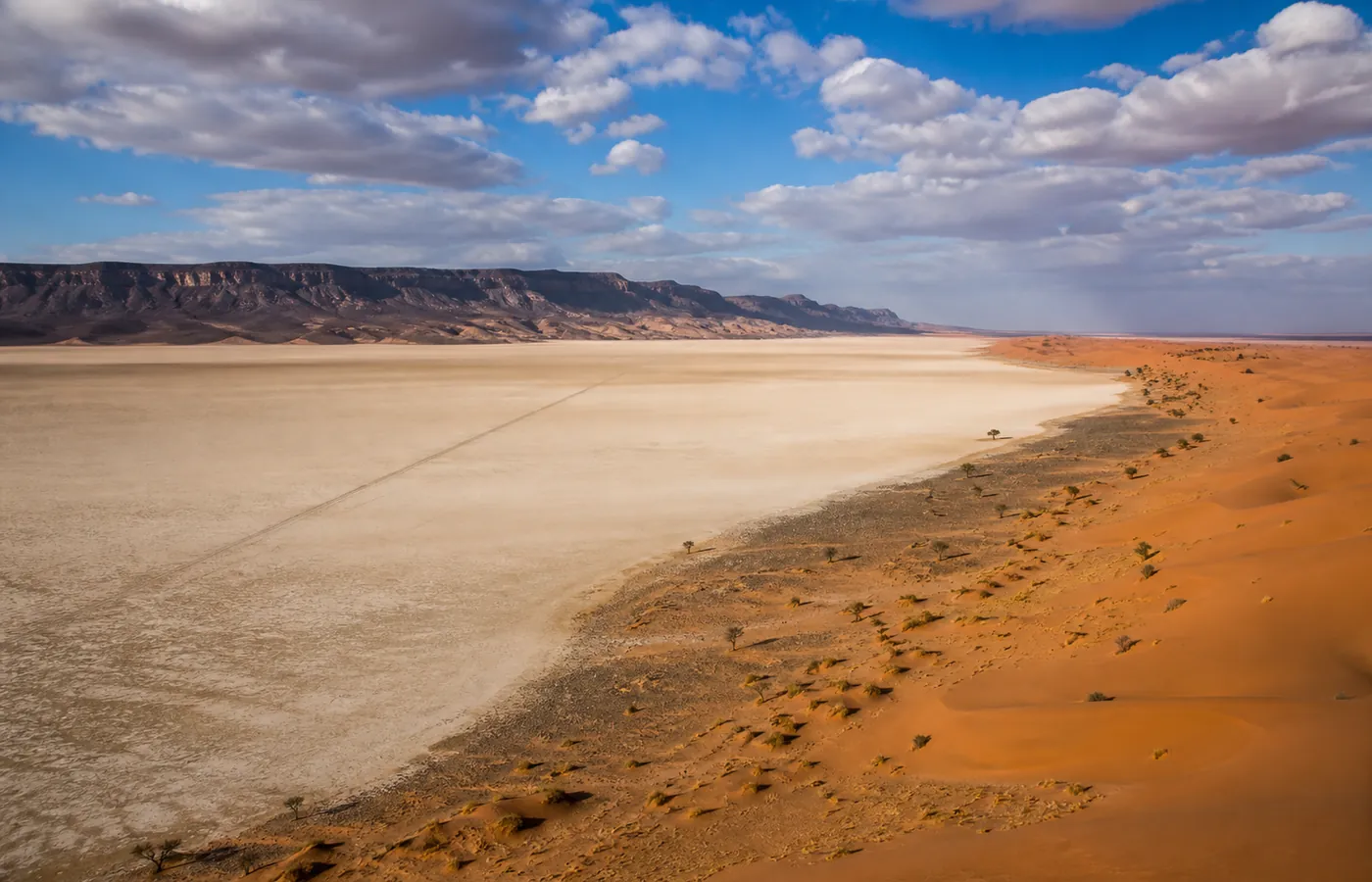
| Lake Iriqui day trip | Under 4 | All the scenery, no night outdoors. Naps happen in the 4x4; in the evening, back to a proper bed. |
| One night at Erg El Mhazil | 4 to 7 | Only 1.5 h of track, low dunes, and a camp for your family alone. |
| 4-day grand tour | 8 to 12 | Mid-stay, one whole day with no vehicle: sliding down dunes and tea with a nomad family. |
| Camel trek on foot | Teenagers | Everyone gets a task: leading a camel, helping to set up camp, reading animal tracks. The battery dies, and nobody asks for a charger. |
The dunes through children's eyes: what our crew notices
- First evening: they ask for the wifi password.
- First morning: one shoe is missing, buried in sand by a brother or sister.
- After that: they run off to play in the dunes, and getting them back takes negotiation.
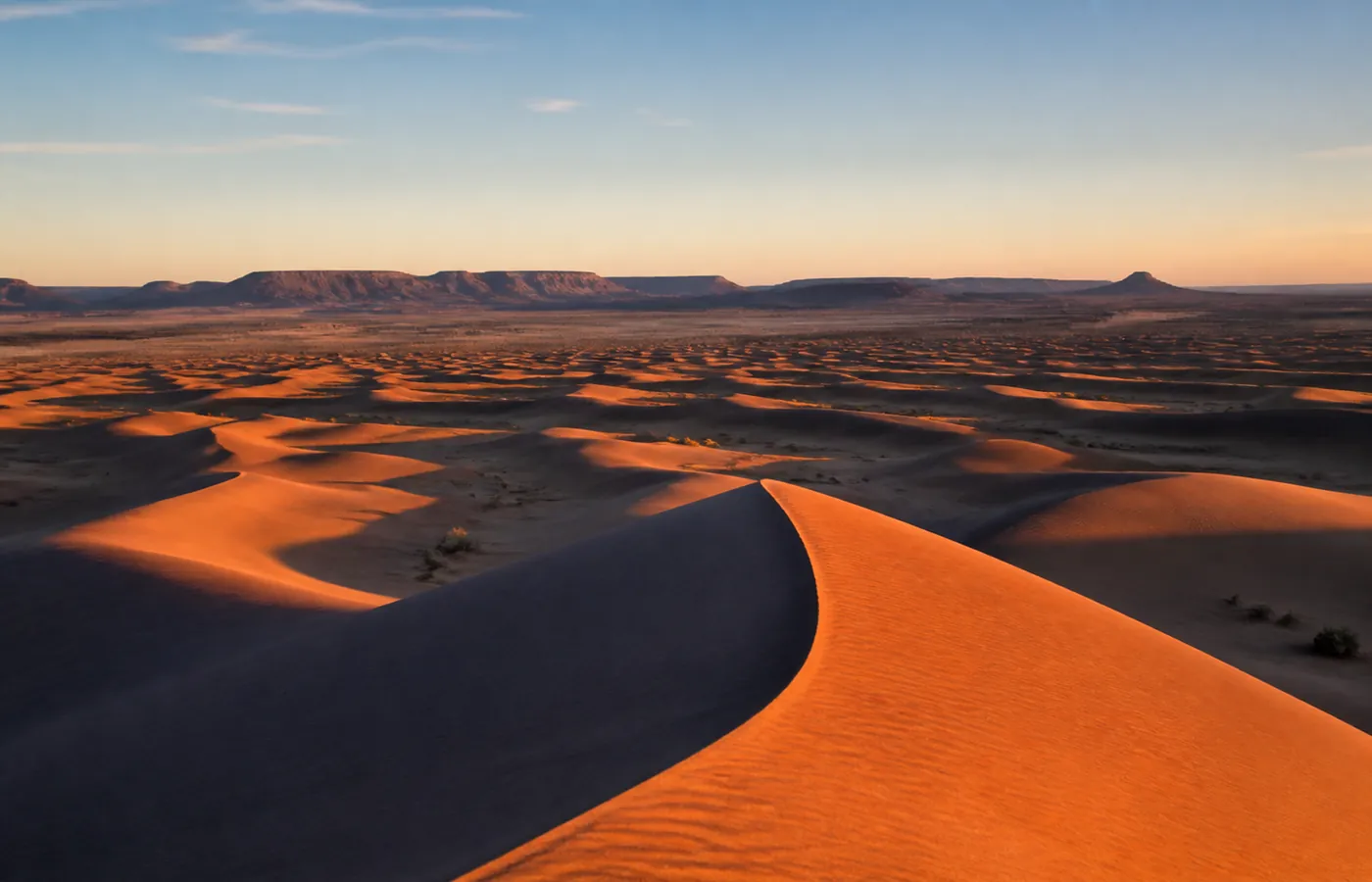
Few places let children play on their own this freely: no cars, no screens, no planned activities. Sand softens every tumble. With an open horizon, the camp stays in sight. Meanwhile the parents rediscover a book and the pleasure of an afternoon nap.
Health, the track, animals: each safety question gets its answer on our page about desert safety in Morocco.
Organisation: what we arrange for families
- Car seats: on request. Tell us each child's age and weight when you book.
- Food: camp dishes go down well with children (bread, eggs, fruit, a tagine without much spice). Let us know about allergies beforehand.
- Pace: shorter stages and more frequent breaks, at no extra charge. The tour moves at the family's speed.
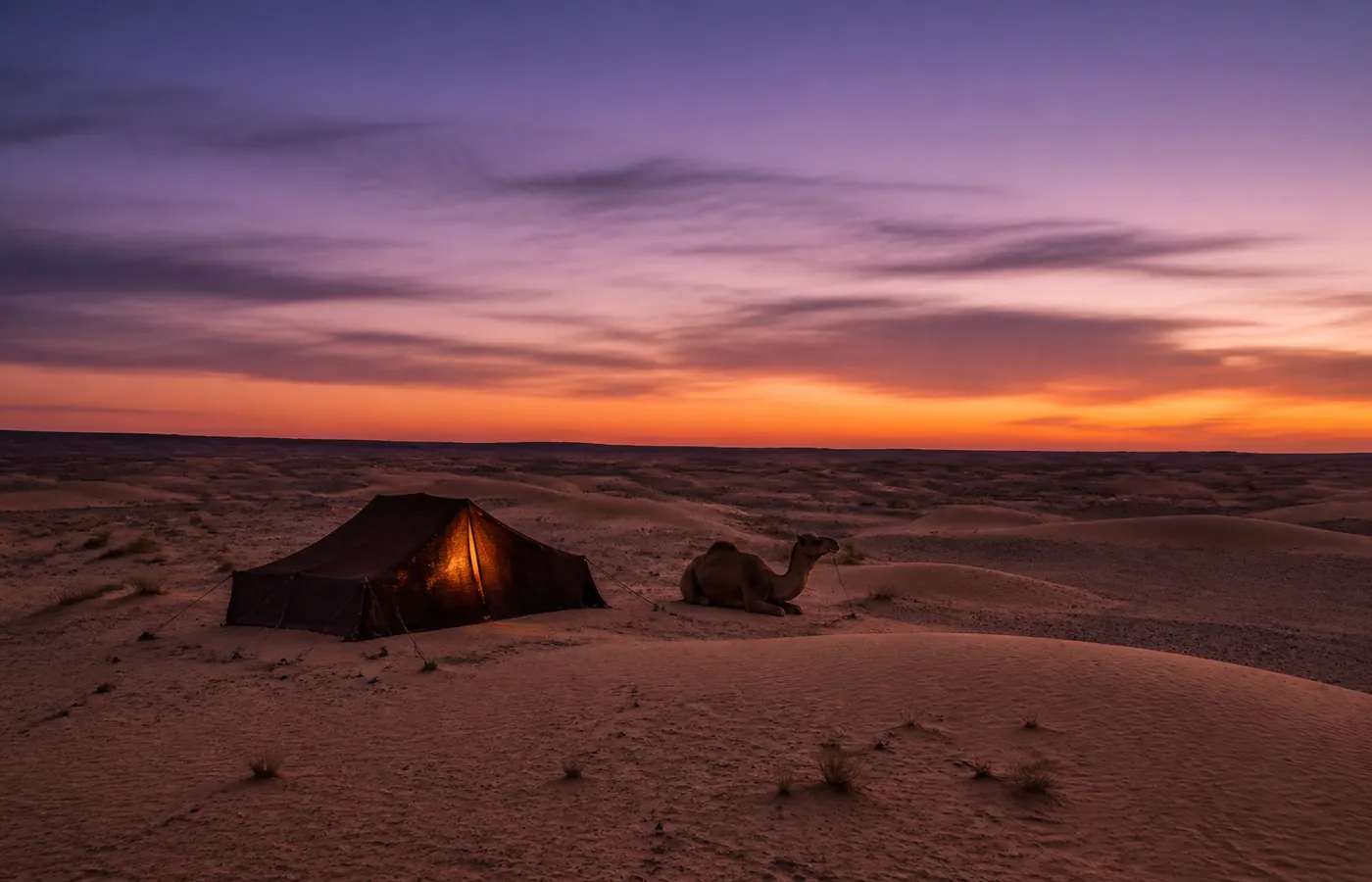
- Tents: one large tent for everybody, or two side by side if the teenagers want some independence.
- Luggage: start from our packing list, double the spare clothes and remember the cuddly toy.
Which time of year for a family?
- Easter and the October half-term: both school breaks land in the best months of the year.
- February: chilly nights, but we supply the warm kit.
- End of the year: Christmas in the desert stays with a child for life. For the last night of December, see our page on New Year's Eve in the dunes.
- Summer: best avoided with children. In July the afternoon can reach 47 °C.
Questions and answers
What is the minimum age for children in the desert?
It depends on the format. For a 4x4 tour with a night at the camp, allow about 4 years at the youngest: the drives are short and the tents well equipped. For a trek on foot the minimum is 8, and two light children can share one camel. Below 4, choose a day out at Lake Iriqui: the children see the desert, then sleep in their own bed in the village.
Will children get bored in the dunes?
That question comes from parents; the children never ask it. To them a dune is a huge sandpit: they slide, dig, tumble down the slopes or have a go on the sandboard. Our guides' children were raised here with no screens and no complaints either. One precaution: bring complete spare outfits, since sand finds its way into everything.
In practice, how do you keep children safe?
Child seats are supplied on request. On the track, the driver keeps to a gentle speed. At camp, the crew is used to small children: someone keeps an eye on the fire, and the camels are picked for their calm temper. The nearest hospital is in Foum Zguid, about an hour away, and the guide knows the road there. The rest is on our safety page.