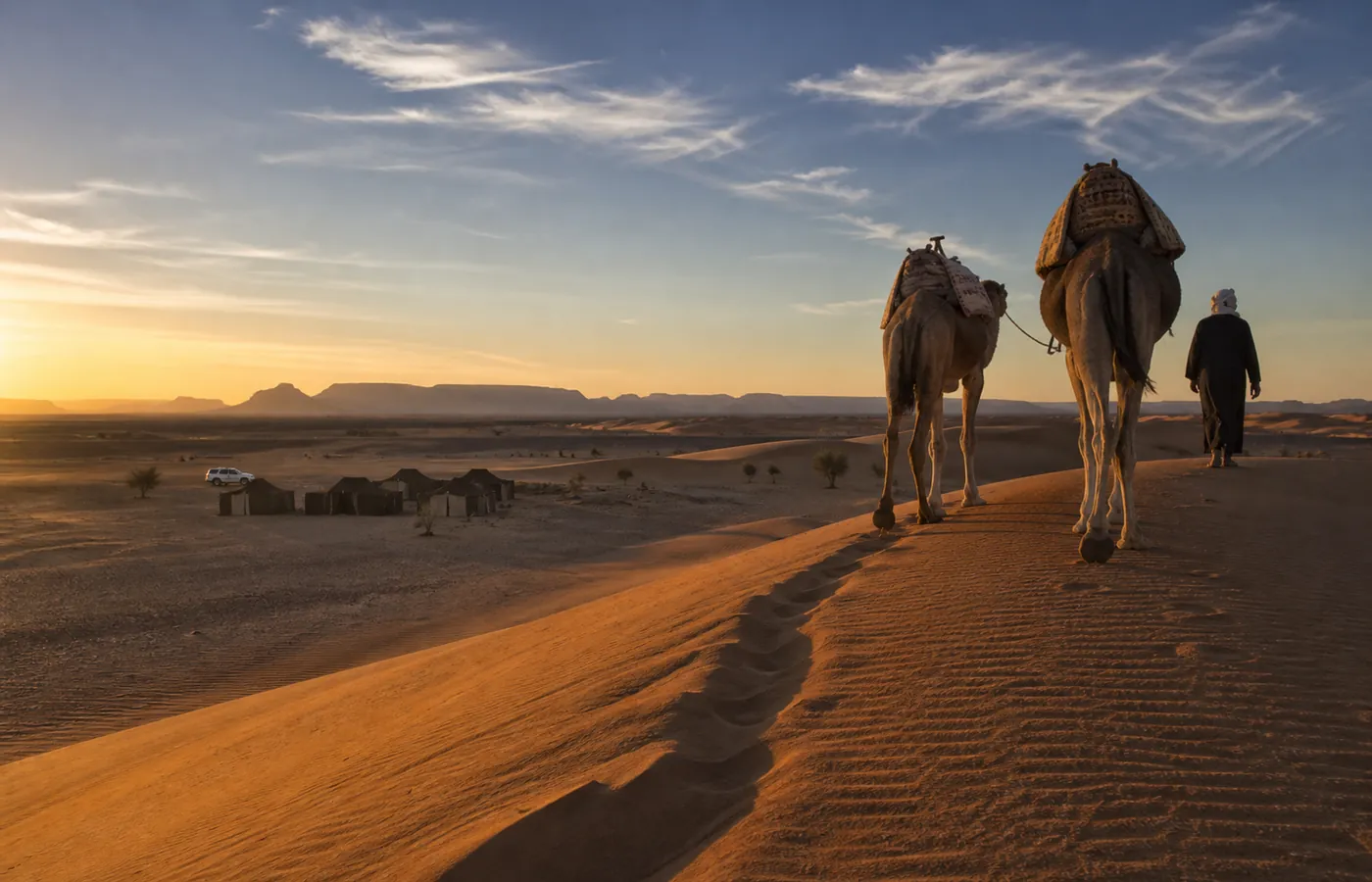
When to go to the Moroccan Sahara: seasons, temperatures and advice
In short: to pick the best time to visit, remember two windows, October to November and February to April. Afternoons then run from 20 to 33 °C depending on the month, nights are pleasant and the light superb. In December and January the desert is magnificent, but the night at camp drops to 0-8 °C. In summer our camp is shut. The calendar below takes each month in turn, as our family lives it here all year.
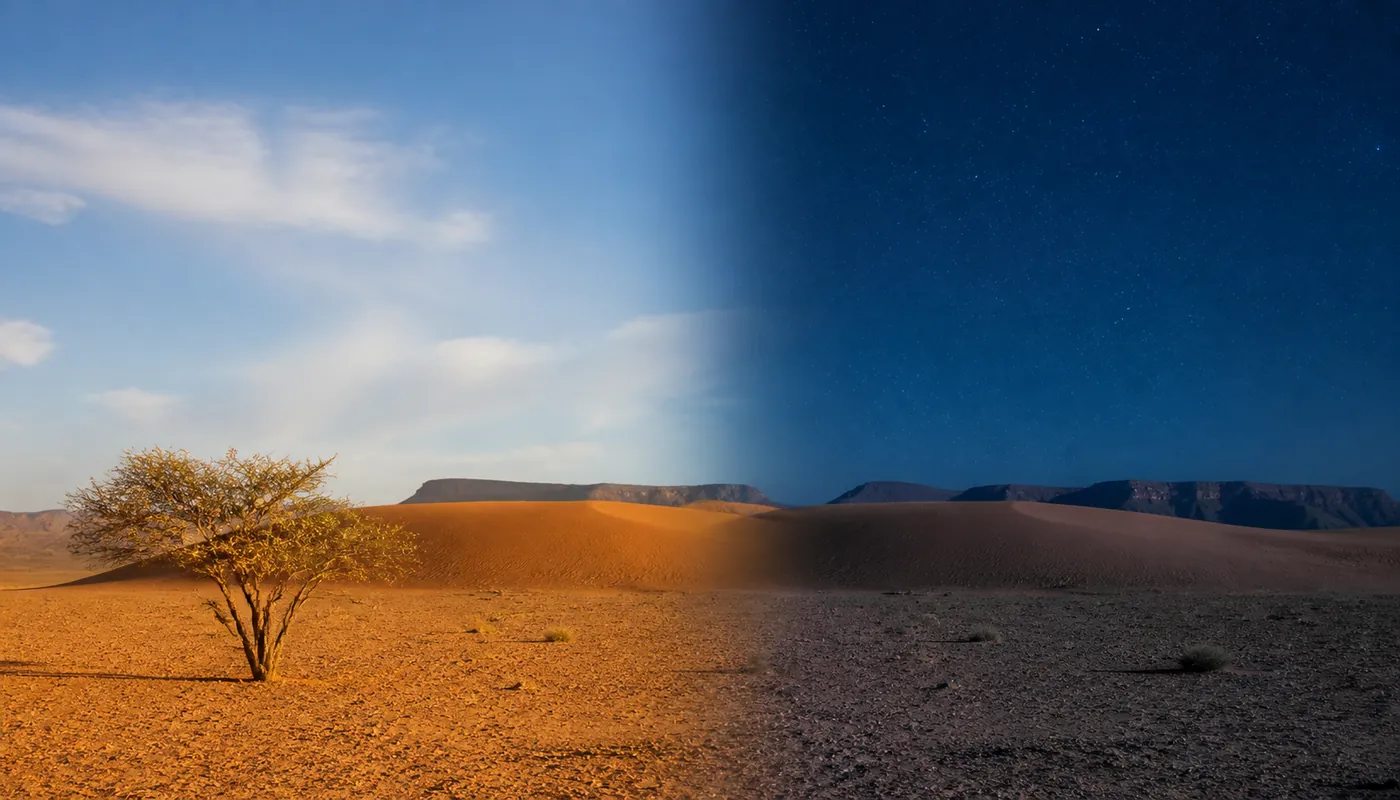
The desert calendar, one month at a time
| Month | Our verdict | Afternoon | Night |
|---|---|---|---|
| October | Excellent. Mild warmth, golden light, and now and then some water in the lake. | 27-32 °C | 15-19 °C |
| November | Excellent. The best trade-off between temperature and visitor numbers. | 22-27 °C | 10-14 °C |
| December | Beautiful and calm. Cold nights (sleeping bags supplied); for the holidays, book early. | 18-22 °C | 3-8 °C |
| January | The clearest air of the year. For travellers who dress warmly. | 17-21 °C | 0-6 °C |
| February | Excellent. Days get warmer; after wet winters, birds on the lake. | 20-25 °C | 6-10 °C |
| March | Excellent. The acacias turn green again. Spring is also the windiest season. | 24-29 °C | 10-14 °C |
| April | Very good. Last month of high season; afternoons turn hot. | 27-33 °C | 14-18 °C |
| May | Possible, mostly in the early morning. | 32-38 °C | 18-22 °C |
| June | Last camp nights in early June, then the camp closes. | 38-44 °C | 24-28 °C |
| July-August | No nights in the dunes. Dawn outings to Lake Iriqui only. | 41-47 °C | 26-30 °C |
| September | The camp reopens. Still hot, yet doable, and almost nobody about. | 32-38 °C | 20-24 °C |
Indicative values, noted by our crew between Foum Zguid and Erg Chigaga over our seasons. Expect extremes: the gap between afternoon and night often tops 15 °C.
Erg Chigaga weather and a phone forecast: not the same thing
- The forecast: a weather app gives you two weeks ahead for the village, on the tarmac. Useful, but it does not describe the camp.
- The night drop: sand does not hold heat, so after sunset the dunes cool far faster than the village. That is normal in an erg, and the reason we hand out sleeping bags in winter.
- Wind: a forecast gives an average speed, not the sand it lifts, and that sand is what can change a programme.
- For a set date: write to us. Our guides weigh the local forecast against the state of the tracks.
Computed monthly averages for rainfall, wind and temperature are on the Erg Chigaga weather sheet.
The right period for your plans
- A first night under canvas: March-April or October-November. Nothing to give up.
- Photography and stars: December to February. The air is at its purest, the Milky Way very sharp, the dunes free of tracks. Take a beanie and a fleece to the camp.
- Families: the February, Easter and October half-term breaks all fit well. Reserve a few weeks before.
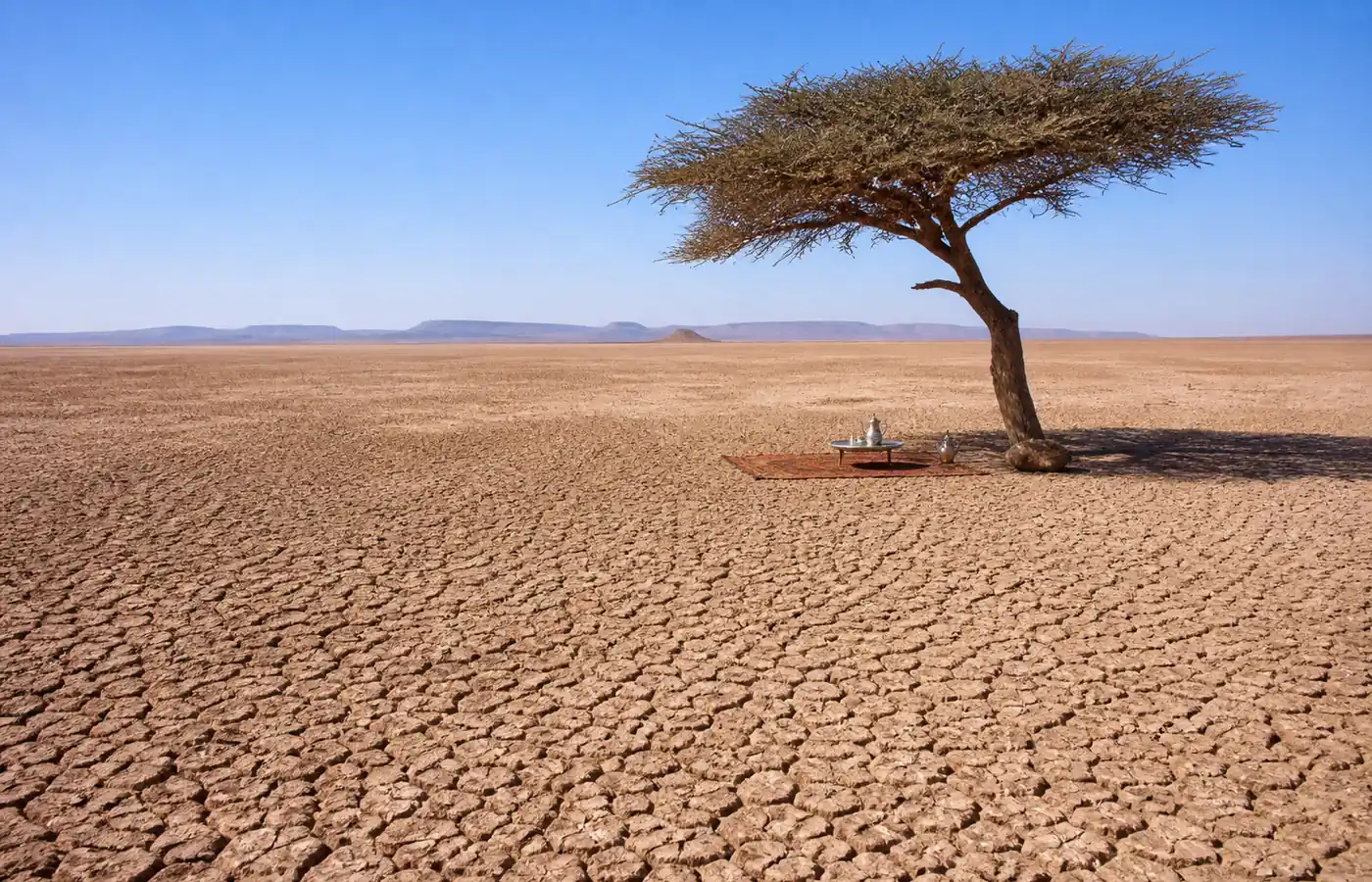
- Birds and a lake with water: January to March, after a rainy winter, flamingos and migrating birds land on Lake Iriqui. Filled in September 2024, the lake has dried since: it is dry in 2025-2026.
- In summer: the palm grove, a dip under Tissint's salt waterfalls, a trip to the lake at sunrise, and the night in the village. In July you see the desert first thing in the morning; read our summer guide.
- Ramadan: in high season for several more years, since it falls in February and March. Everything runs, and sharing the ftour at camp stays with you. Read the desert during Ramadan.
- End of the year: Christmas for a quiet break, New Year's Eve for a party night. Either way, reserve early.
When to book
- Most dates: a few days' notice is enough for the tours from Foum Zguid.
- New Year's Eve: the camps fill up several weeks in advance.
- Easter, and bank holidays in May: heavy demand as well.
- Our advice: for those three periods, send us your dates the moment they are fixed.
Questions and answers
Can you spend the night in the desert in summer?
At Erg Chigaga, we do not offer it: our camp season runs from September to early June. In July and August it is still 26 °C at the coolest point of the night, and the heat inside a tent keeps everyone awake. In summer we suggest a night in the village instead, in the oasis, followed by a sunrise departure for Lake Iriqui.
Does it ever rain in the Moroccan desert?
Not often. When it does, it is usually from September to November, in short storms. Those showers are a stroke of luck: in some years they put water back into Lake Iriqui, turn the acacias green and bring gazelles and birds back to the national park.
Should you worry about sandstorms?
Wind-blown sand can rise in any season, but mostly in spring, from March to May. The chergui is a different wind: hot and dry, it blows in high summer. Our guides follow the local forecast and shift the timing or the route when needed. The camp is pitched to stand up to wind, and a well-tied cheche protects what matters.