Travelling in the desert during Ramadan: the practical sheet
In short: Ramadan is a good time to head for the desert. Tours carry on as usual, your meals are served normally, and on top of that you get an atmosphere Morocco has at no other time. For 2027, expect the holy month from about 8 February to 9 March (the exact date depends on the sighting of the moon), which is peak season in the dunes. This sheet separates what really changes from what is only rumour.
What stays exactly the same
- The programme: prices, camps, departures and routes are identical to the rest of the year.
- The season: Morocco's tourist areas keep working through Ramadan, the South more than anywhere. February and March are our busiest months.
- Your meals: breakfast, lunch and dinner at the usual times, and as much water as you want in the vehicle.
- Your freedom: nobody asks you to fast, and nobody is surprised that you don't.
What changes, and makes the trip worth it
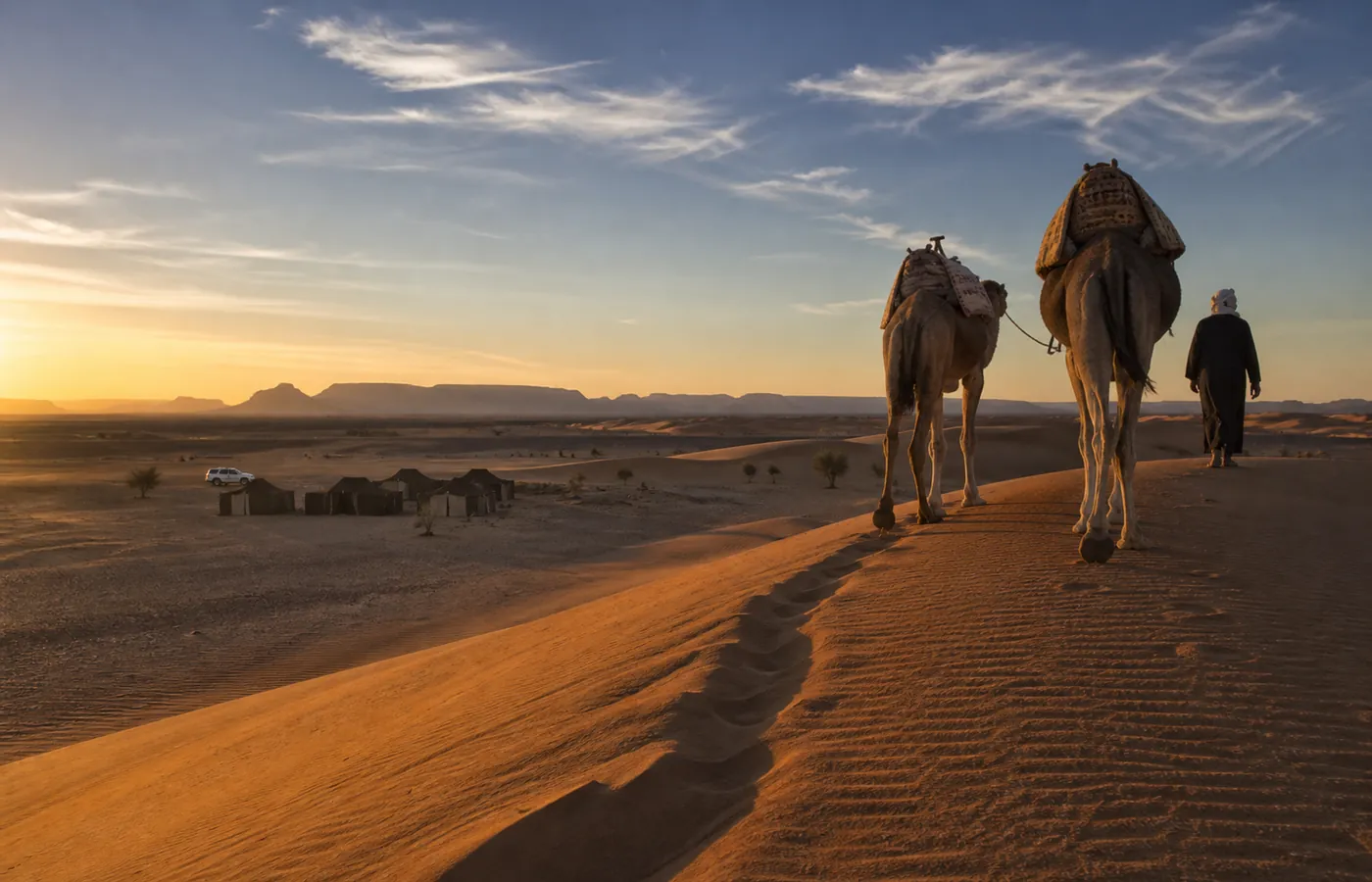
The whole country lives later, and the desert later still. At camp, the ftour, the meal that breaks the fast at sunset, becomes the high point of the day. Harira soup arrives just as the sun slips behind the dunes. Dates go round. The evening lasts longer than usual, and the mood is more cheerful.
Travellers are often asked by the crew to join this meal, and the offer is meant. Several who came during Ramadan tell us they found "the real Morocco". Strong words. Still, these evenings have a flavour that an ordinary high season does not give.
Three practical points to know
- Departure day: in Marrakech or Ouarzazate, many cafés shut during the day, and traffic gets tense in the last hour before sunset. We time your pick-up to suit.
- Tact: food and drink in the 4x4 or at camp are fine. A picnic laid out at 4 p.m. in the busiest part of the souk can wait until evening. That is manners, not a written rule.
- Eid al-Fitr: this festival of one or two days closes Ramadan. It is spent with family, a bit like Christmas, so our crew is smaller then and some dates are closed. Does your stay fall on Eid? Tell us early and we build the programme around the festival.
Ramadan dates for the next few years
- The principle: each year, Ramadan starts about eleven days earlier than the year before.
- 2027: from about 8 February to 9 March.
- 2028: from late January into February.
- What it means: for several years, the holy month falls in the desert's good season. The climate of each month is described on our page about when to go to the Sahara.
- Check: the moon sighting fixes the real dates, which become certain only days before. A trip near the first or last days of the month? Ask us as you book.
Questions and answers
Are tours still running during Ramadan?
Yes, all of them: same departures, same routes, same prices. As everywhere in Morocco, our crew fasts while working, and we organise things among ourselves: the drivers take turns, and the meal that breaks the fast travels with us. You go on eating and drinking as you like, and the 4x4 always carries all the water you want.
Can I eat in front of a guide who is fasting?
Yes, and our guides will say so themselves. Fasting is a personal choice, not an obligation for guests; watching you go without would embarrass them more. A little tact is enough: no big meal right under their nose late in the afternoon, and when ftour comes, offering round a pot of tea is a kind gesture. If the crew asks you to join them as they end the fast, say yes: it is a mark of honour.
Can you find restaurants open in the daytime in Foum Zguid?
In the daytime, a few addresses discreetly feed travellers, and grocers keep their doors open. On our tours the question never comes up: your meals are planned and put on the table at the usual hours. After ftour the village takes on a special liveliness, and those are some of the finest evenings of the year.