Quick facts
- Length
- 3 days / 2 nights
- Starting point
- Foum Zguid
- End point
- Foum Zguid
- Vehicle
- 4x4 with driver
- Group size
- Private, up to 6 people
- Rate
- From €260 per person, based on 2 travellers
- Camp open
- September to early June
- To book
- By WhatsApp or the form
In short: 3 days and 2 nights out of Foum Zguid, with both nights at the Erg Chigaga camp, one whole day in the erg with no driving, the Oum Laalag oasis and the rock carvings of Jbel Bani.
Who it is for: travellers who would rather stay inside the silence of the Sahara than drive through it. The pace stays gentle, never more than three hours in the 4x4 at a stretch, and every stop is one of our guides' own favourite places.
The essentials
- Two nights at the camp below the dunes
- Rock carvings of Jbel Bani, the Oum Laalag oasis
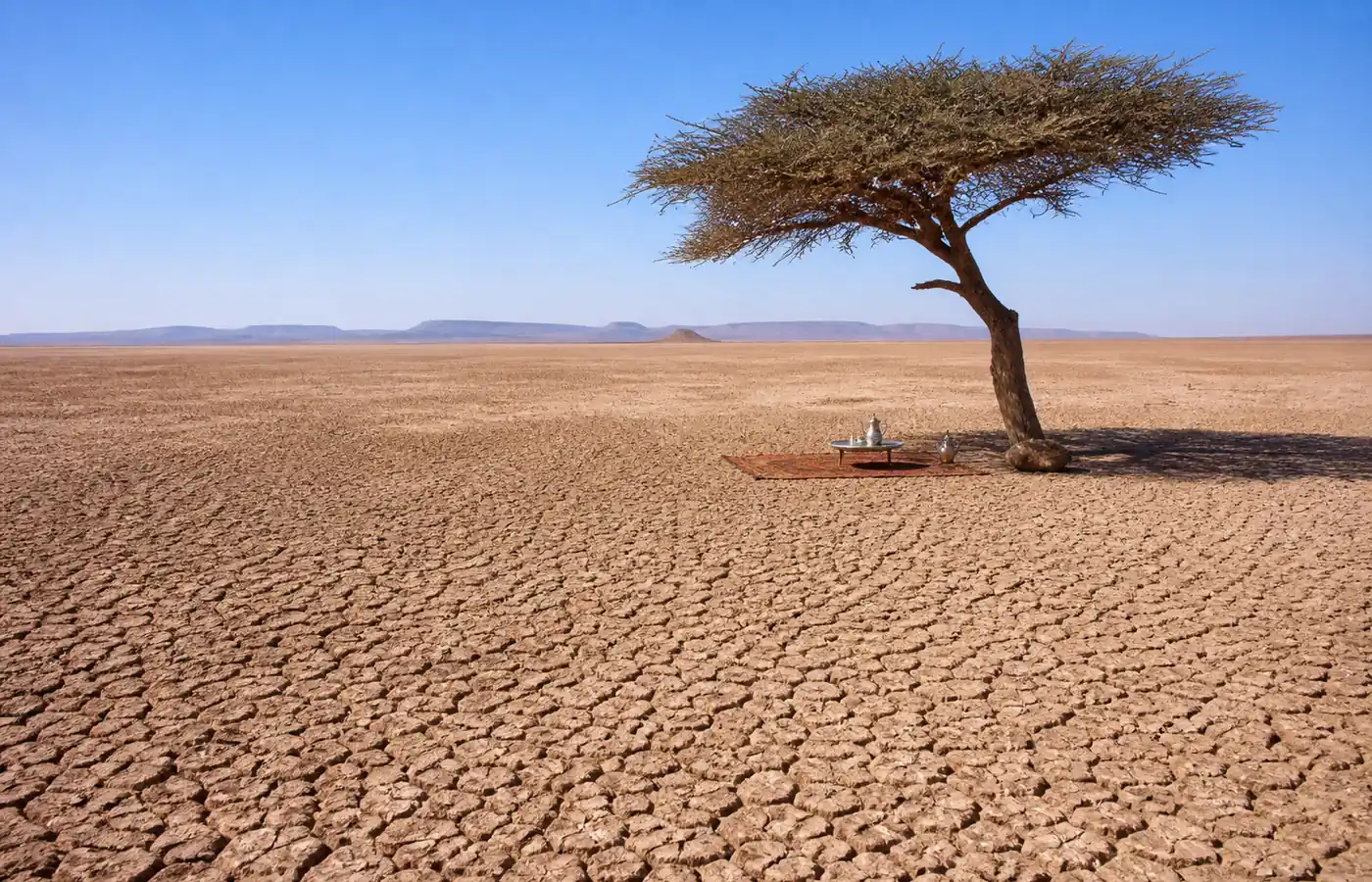
- Lake Iriqui crossed from one side to the other
- An early-morning walk among the dunes
- Berber meals, campfire and music
The programme
Day 1
-
Lake Iriqui, then the dunes
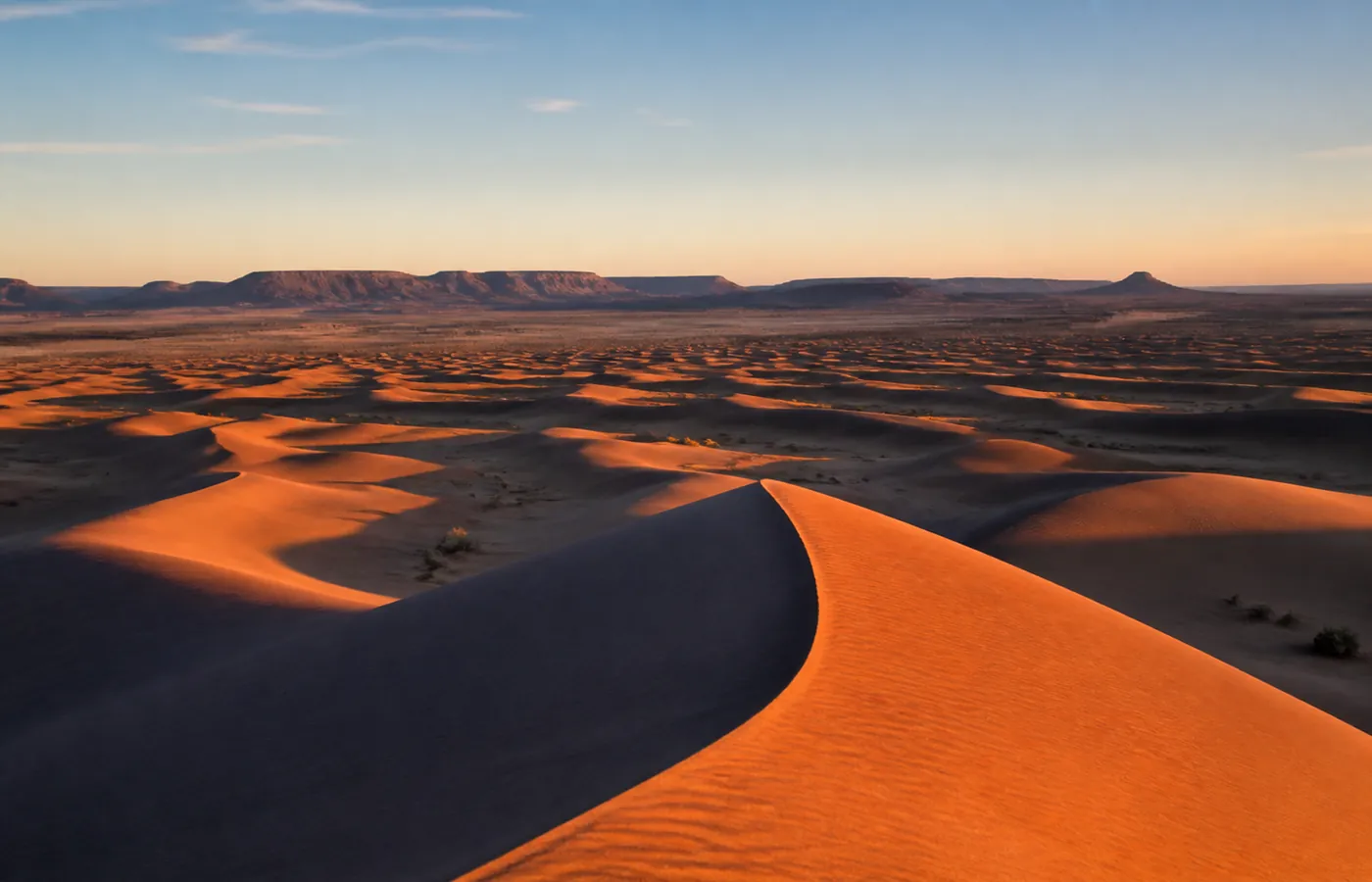
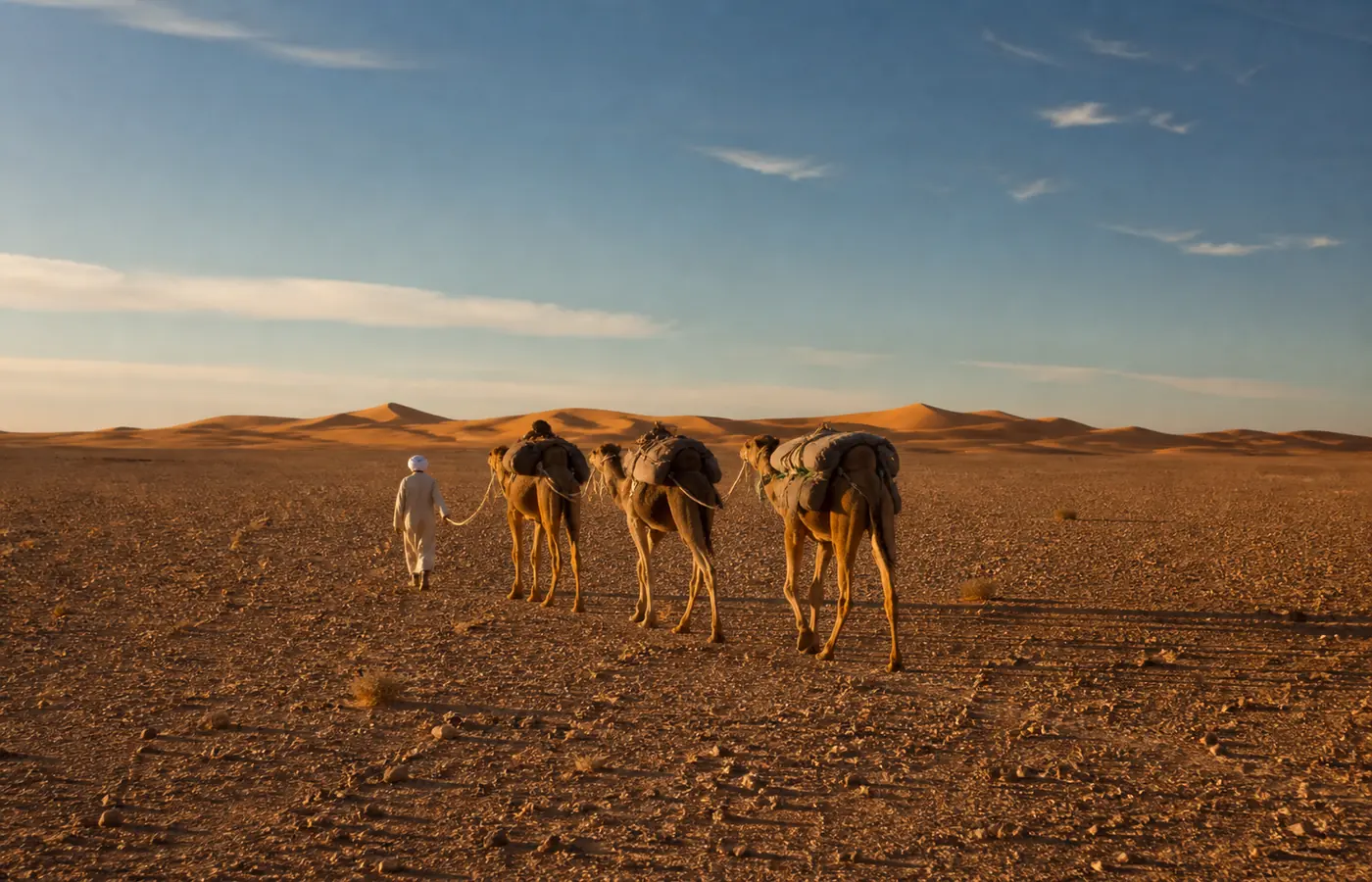
You leave in the early afternoon, cross Lake Iriqui and the Moroccan Colorado, and reach the dunes as the sun goes down. Camels, dinner, then the first night at the camp.
Day 2
-
A whole day in the erg
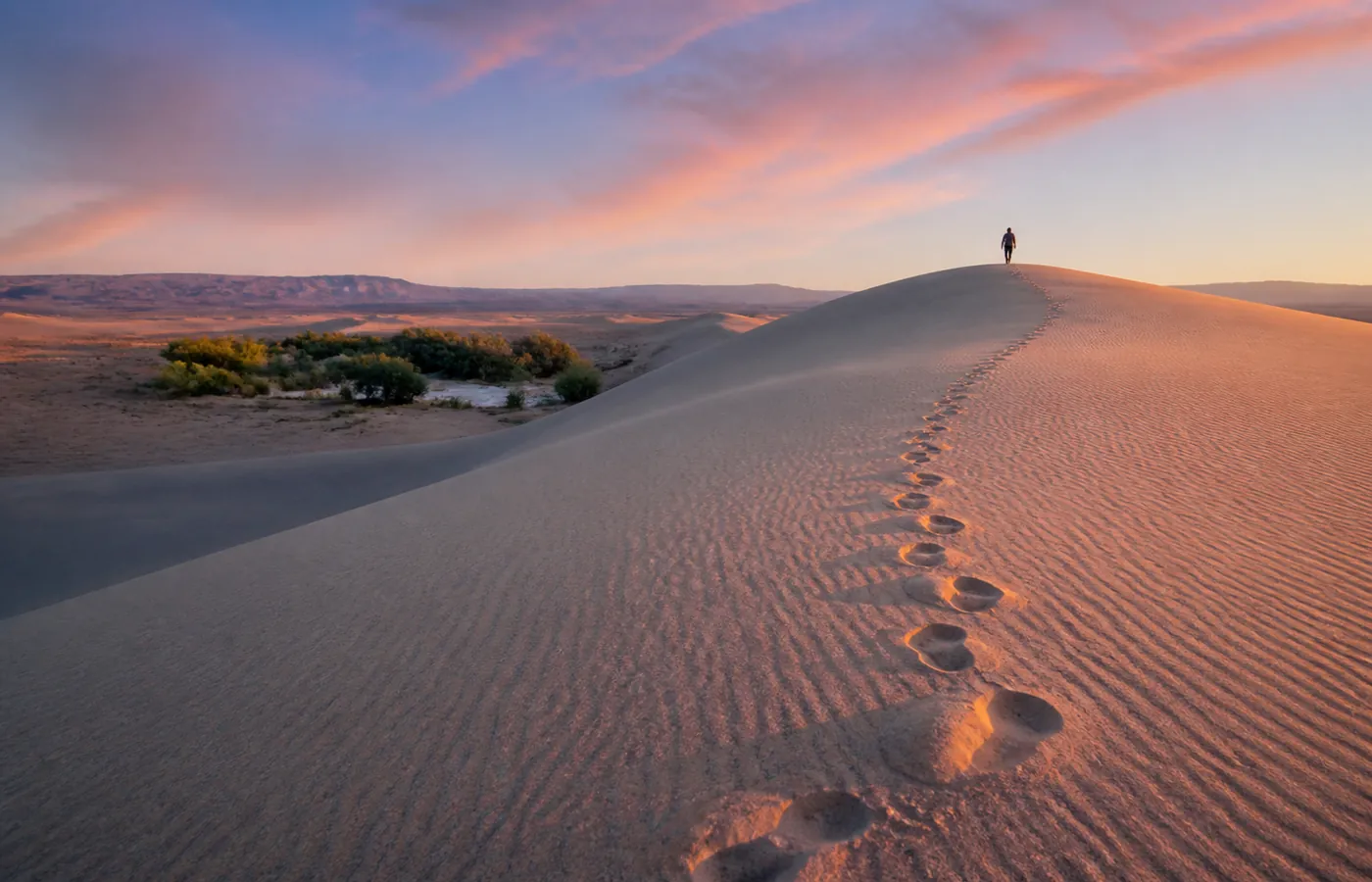
Sunrise: you walk up into the high dunes before the sand warms. Next comes the sacred oasis of Oum Laalag, where you eat and rest in the shade of tamarisks. The way back to camp follows the crests; night two is again under the stars.
Day 3
-
The Jbel Bani carvings, then the village
On the Jbel Bani track, a halt at engravings several thousand years old: antelopes, hunters. You are back in Foum Zguid in time for lunch.
In the price, and not
In the price
- Driver-guide and private 4x4
- Two camp nights, equipped tents
- All meals, day-1 dinner through day-3 breakfast
- Camel ride
- Mineral water and tea
Not in the price
- Lunch on day 1
- Other drinks
- Tips
The third day, in practice
Two days are enough to see the desert; the third lets you settle into it. Kilometres have little to do with it: you open your eyes in the dunes, and you will spend the next night there too.
Day 2: no road, no timetable. You walk while the light is good, nap in the shade through the hot hours and drink tea without looking at the time. It is the day our guides like best, and the one travellers mention most once they are home.
The dune walk: how long, how hard
Length: an hour and a half to two hours on the second morning, on cool sand, often barefoot.
Level: more a stroll between the crests than a hike, with stops to take photos, follow a beetle's tracks or listen to the guide. A child of six and a walker of seventy-five both manage it, each at their own speed.
Alternative: a camel can carry you. What counts is to be well away from camp, deep among the dunes, at sunrise.
Oum Laalag, a stop many trips skip
Day 2, around noon: you stop at Oum Laalag, a spring of fresh water circled by tamarisks, alone in open desert. Nomad families hold it sacred and caravans have always halted there; trips in a hurry drive straight past.
Lunch in the shade and a rest. Out here, with nothing but rock and sand on every side, you understand what a spring is worth. For many travellers, this stop alone makes the third day worth taking.
When to go and weather
Period: September to early June; for walking in the dunes, October to April. December and January nights are cold: warm sleeping bags are provided, but pack a woolly hat.
Questions and answers
What does it add to the 2-day tour?
Three things: a walk in the erg at first light, the stop at Oum Laalag and the Jbel Bani carvings. Above all, a different rhythm, with two whole nights in the desert instead of one.
Is the dune walk hard work?
Not at all. Think ninety minutes to two hours of slow walking on soft sand, in bare feet or trainers. Tired, or not in the mood? Shorten it, or ride a camel instead.
Can we have the camp to ourselves?
Yes, and outside school holidays it is easier. Ask when you book; if the dates allow, your group gets a camp of its own, free of charge from 4 people.
Are both nights at the same camp?
Yes, deliberately. Nobody strikes the tents, which leaves day two open for the oasis and the walk. Want to go further? On request, night two can be spent at a plainer nomad camp further into the erg.
What bag should I bring for three days?
A small soft bag is enough; the rest of your luggage can stay with us in Foum Zguid. Pack: a cheche, sunglasses, sun cream, a fleece for the evening, a head torch, a power bank and light shoes that close. Provided by us: meals, water, blankets and sleeping bags. Winter extra: a warm hat, since December and January nights drop to between 0 and 8 °C.
Still have a question? Check the FAQ or read what past travellers say.