Quick facts
- Length
- 2 days / 1 night
- Starting point
- Foum Zguid
- End point
- Foum Zguid
- Vehicle
- 4x4 with driver
- Group size
- Private, up to 6 people
- Rate
- From €140 per person, based on 2 travellers
- Camp open
- September to early June
- To book
- By WhatsApp or the form
In short: a trip of 2 days and 1 night that leaves Foum Zguid, crosses Lake Iriqui by 4x4 and reaches Erg Chigaga before sundown. You sleep at a camp below the dunes and are back in the village late the next morning.
Why Foum Zguid: 2.5 h of track is all it takes to reach the dunes. If you come from Marrakech, Agadir or Ouarzazate, this is the shortest way into the big wild dunes of Morocco, quicker overall than going through M'hamid. The tarmac stops as you leave the village; then come the hamada, the Iriqui sebkha, and at last the sand.
On the programme: the crossing of Iriqui National Park, the red rocks of the Moroccan Colorado, the fossil plateau, a camel ride at sunset, a Berber dinner near the fire and a night with no artificial light on the horizon. Private vehicle, driver-guide born in Foum Zguid, departures every day from September to early June.
The essentials
- Coming from Marrakech, Agadir or Ouarzazate: the quickest access to Erg Chigaga
- Lake Iriqui and Iriqui National Park crossed by 4x4
- The sun setting, then rising, over the dunes
- One night at the camp: nomad tent, Berber meal, campfire
- Camel ride in the price
- Private vehicle, guide from Foum Zguid
The programme
Day 1
- 2:00 pm
Meeting in Foum Zguid, then onto the track
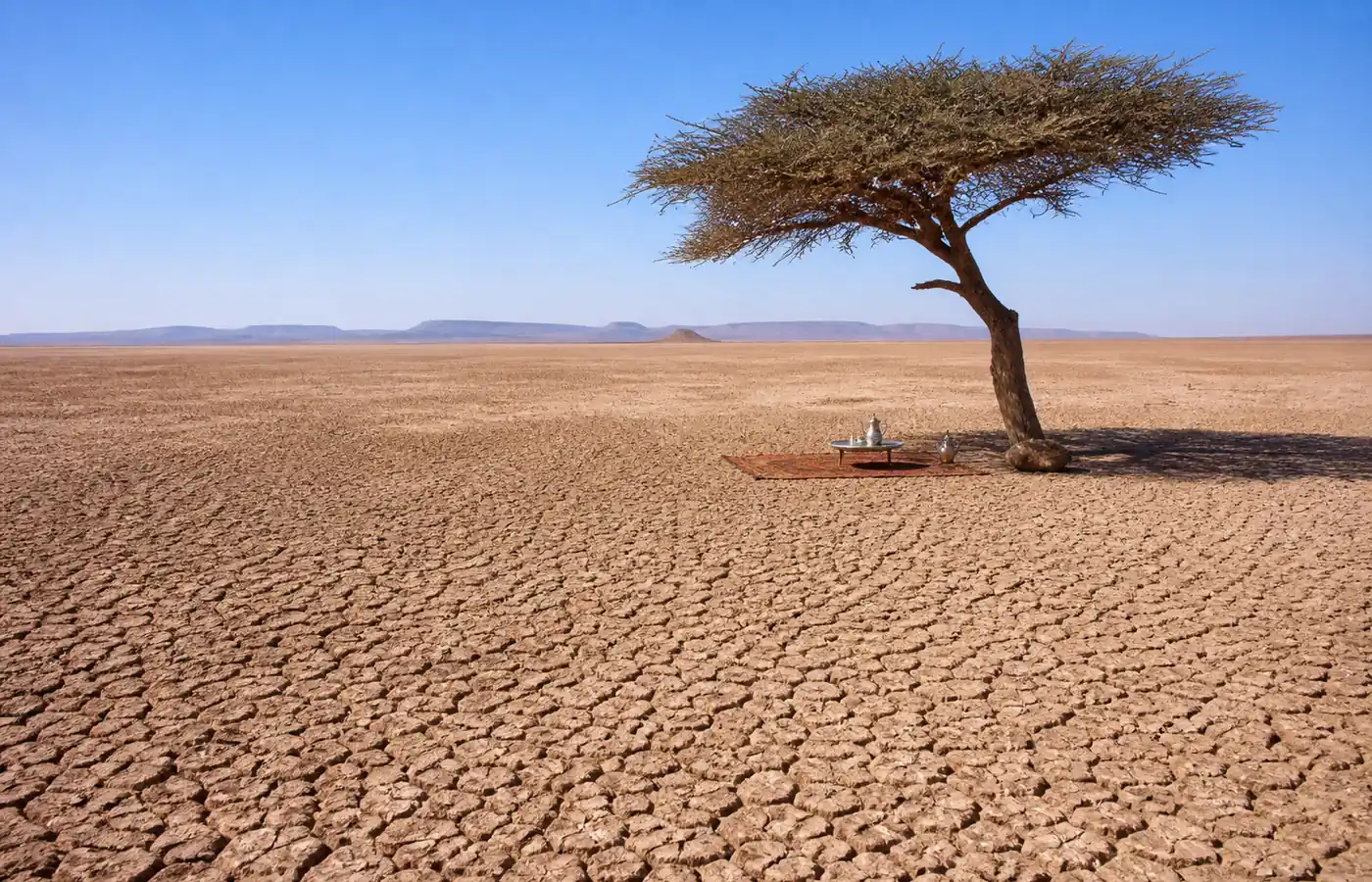
Welcome over a glass of tea in the village. Then the 4x4 leaves the tarmac: hamada stones, scattered acacias, and the great white plain of Lake Iriqui, a former Saharan lake that Iriqui National Park now protects.
- 4:00 pm
Red rocks and fossils
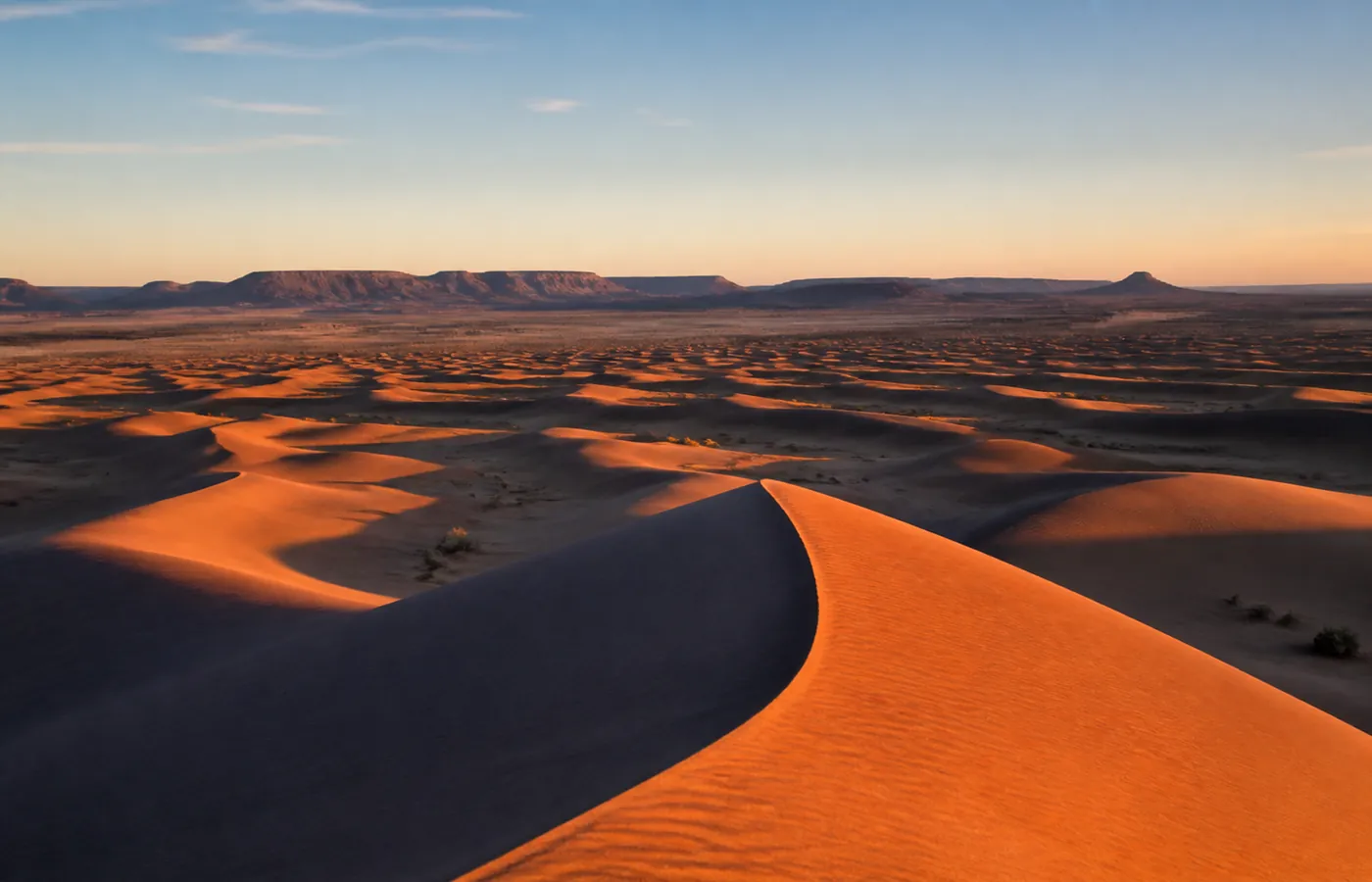
A halt at Jbel Madouar, whose red formations earned it the nickname of Moroccan Colorado, then at the fossil plateau. Within one hour, three landscapes follow each other: reg, hamada, first dunes.
- 5:30 pm
Camp, camels and the sun going down
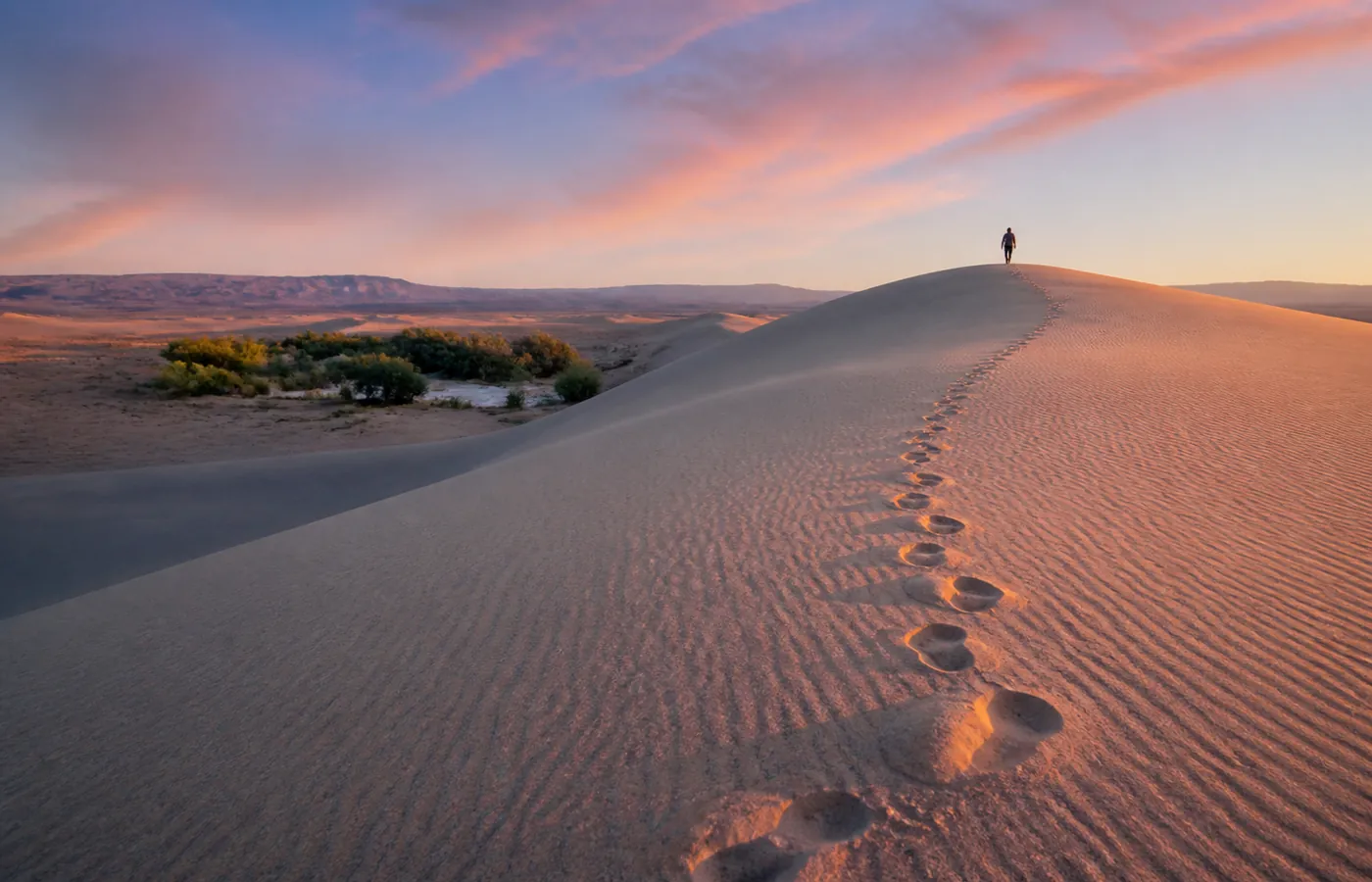
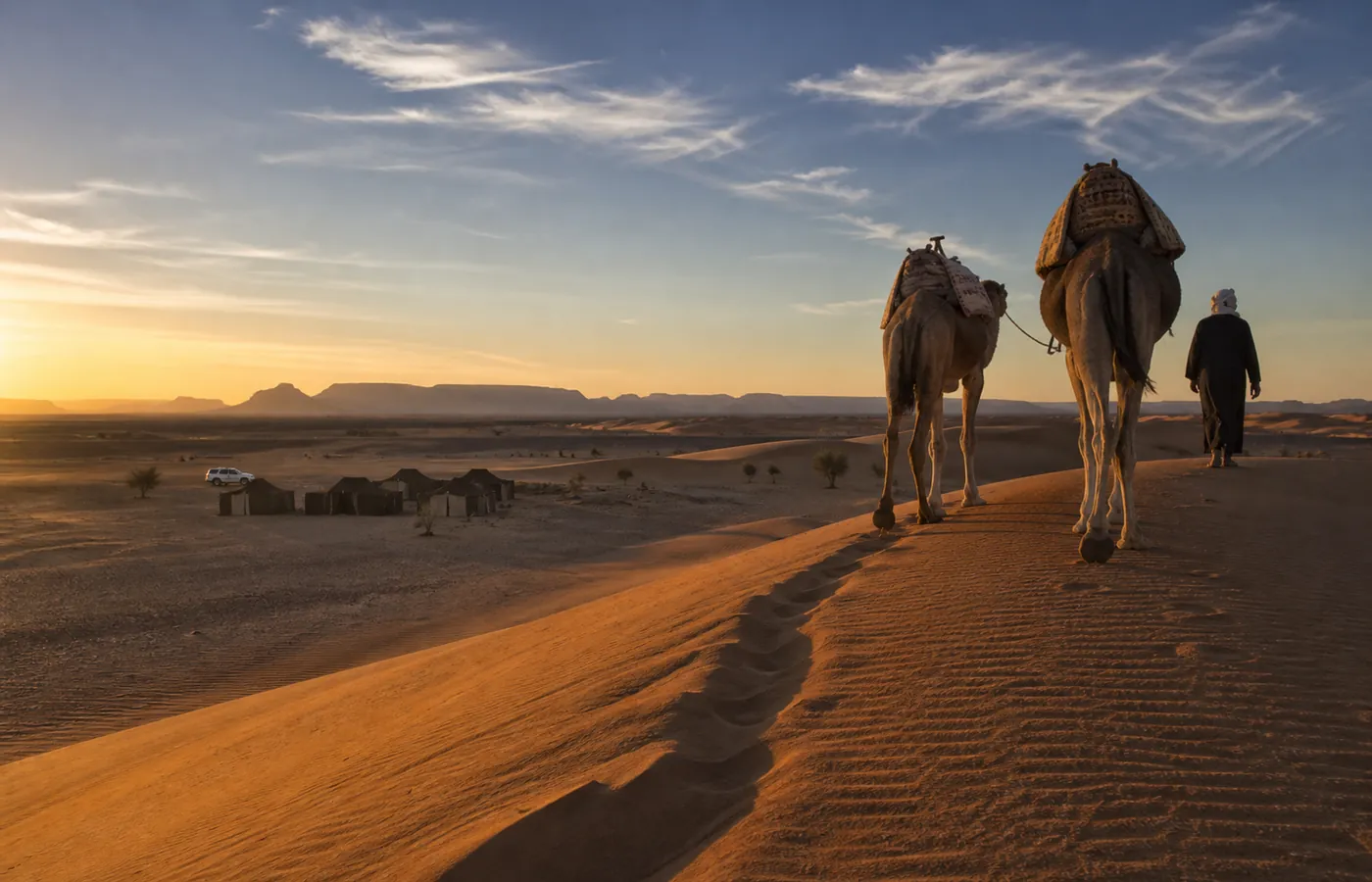
You settle in at the camp, right where the sand begins. On camelback, you ride up to a crest to watch the sun drop. All around: roughly 40 km of dunes, and not one streetlight closer than 60 km.
- 8:00 pm
Berber dinner, fire, starry sky
On the menu: tajine, bread baked in the sand, mint tea near the fire, with traditional music. You sleep in a nomad tent, beds and blankets provided, or out in the open under the stars if you prefer.
Day 2
- 7:00 am
Sunrise, then breakfast
A gentle wake-up to see the first light reach the crests. Breakfast at the camp before you set off again.
- 11:30 am
Back to the village
The way back follows another branch of the track, with a photo stop at the viewpoint over Lake Iriqui. You reach Foum Zguid before noon.
In the price, and not
In the price
- Driver-guide and private 4x4
- One night in an equipped nomad tent at the camp
- Berber dinner, then breakfast
- Camel ride
- Mineral water and mint tea
Not in the price
- Midday meals
- Other drinks
- Tips, as you see fit
The vehicle and the guide
Vehicle: a Land Cruiser serviced before each season, fitted with a compressor, sand ladders, a cool box and a second spare wheel. Mineral water as you like, at no extra cost.
Guide: born in Foum Zguid, speaks English and French, and picks the branch of track according to the state of the lake. The pace is yours: drive fast between two photos or stop at every acacia, both suit us.
Group: the 4x4 is kept for your group alone; we never add other travellers, even at the height of the season.
The evening at the camp, hour by hour
5:30 pm: we show you your tent; then off to the nearest crest, tea in hand, to see the sun set.
8 pm: dinner (harira soup, tajine, fruit), at the shared table or in front of your tent, whichever you prefer.
After that: campfire, drums if the team feels like it, no set programme. Some nights the music goes on late; on others people look at the sky without a word. The quiet is part of the stay.
Night: tents shut tight, thick blankets; you can also carry your mattress outside and sleep in the open. Someone comes to wake you half an hour before sunrise, never sooner. For more comfort, the luxury camp offers a private tent with its own shower room.
When to go and weather
Period: September to early June. Best months: October-November and February-April, with days of 20 to 33 °C depending on the month and cool nights (a fleece helps from December to February). In summer, we replace the night in the dunes with dawn departures to Lake Iriqui.
Questions and answers
Why leave from Foum Zguid and not from M'hamid?
Both tracks lead to Erg Chigaga. From M'hamid it takes less time: 1.5 to 2 h, against roughly 2.5 h from Foum Zguid. Our track has other strengths. It runs along the Lake Iriqui basin and the Moroccan Colorado, scenery with more variety than in the south, and comes out on the west side of the erg, where you pass few camps. For anyone arriving from Marrakech, Agadir or Ouarzazate via Taznakht, it is also the shortest journey overall: roughly two hours less from Marrakech.
What exactly does the €140 price cover?
The private 4x4, the guide, the night at the camp, dinner, breakfast and the camel ride, on a basis of 2 people. Left for you to pay: lunches and extra drinks. Nobody will ask you for a supplement on site.
Can we come with children?
Yes. The stages stay short and the track is not too rough. Families with children aged 4 and over often do this route; we adjust the pace and provide child seats on request.
Where do we sleep, in practice?
At the camp we run at the bottom of the Erg Chigaga dunes: wool nomad tents with proper beds and blankets; the washrooms are shared. For a supplement, the luxury camp option gives you a private tent with its own shower room.
How do we reach Foum Zguid?
It is tarmac all the way. Count roughly 4 h of driving if you start in Agadir, 2.5 h in Ouarzazate and about 5 h in Marrakech, by way of Taznakht. Rather not drive? Our trip from Marrakech comes with the transfer.
Still have a question? Check the FAQ or read what past travellers say.